
Category & Buyer Context
Category: SPF / Skincare
Positioning: Mid–Premium
Perceived Risk: High
Before purchasing SPF, buyers are not thinking about discounts. They’re thinking:
- Will this break me out?
- Will it leave a white cast?
- Will it feel heavy or greasy?
- Do I really need this daily?
- Is this worth the price?
SPF requires routine change. Routine change requires confidence.
In high-skeptic skincare, conversion depends on belief progression, not incentive size.
Strategic Objective of the Flow
This welcome sequence is not primarily built to distribute a 10% code.
Its real job is to:
- Normalize SPF as effortless
- Reduce texture-related hesitation
- Simplify product selection
- Layer proof gradually
- Introduce urgency only after confidence increases
This is a confidence-led structure and that’s directionally correct.
What’s Working
1) Friction Reduction Before Pressure
Email 1 introduces the brand and incentive without aggressive urgency.
By Email 5 (“The easiest way to add SPF to your routine”), the messaging reframes SPF as:
- Primer + protection
- Time-saving
- Multi-functional
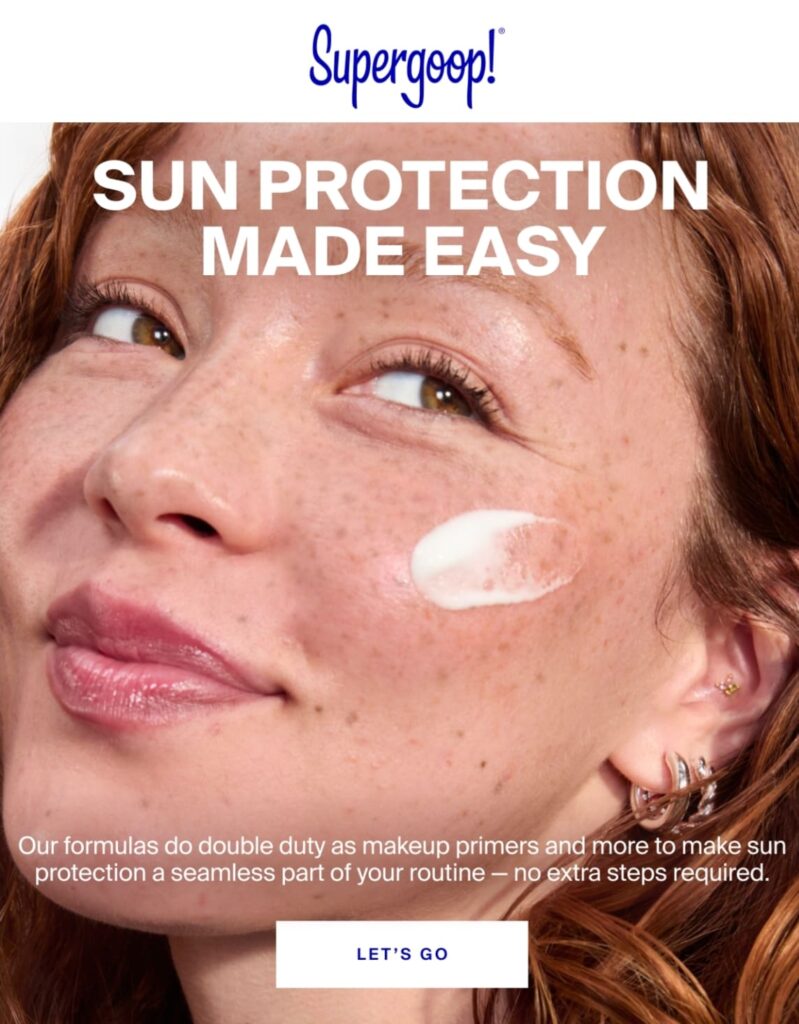
This directly addresses the “this feels like effort” objection. They reduce psychological friction before escalating commitment.
And that sequencing is strong.
2) Decision Fatigue Is Controlled.
Email 3 highlights only three bestsellers instead of flooding the subscriber.
Email 6 introduces a selector-style guidance format based on:
- Skin type
- Finish
- Use case
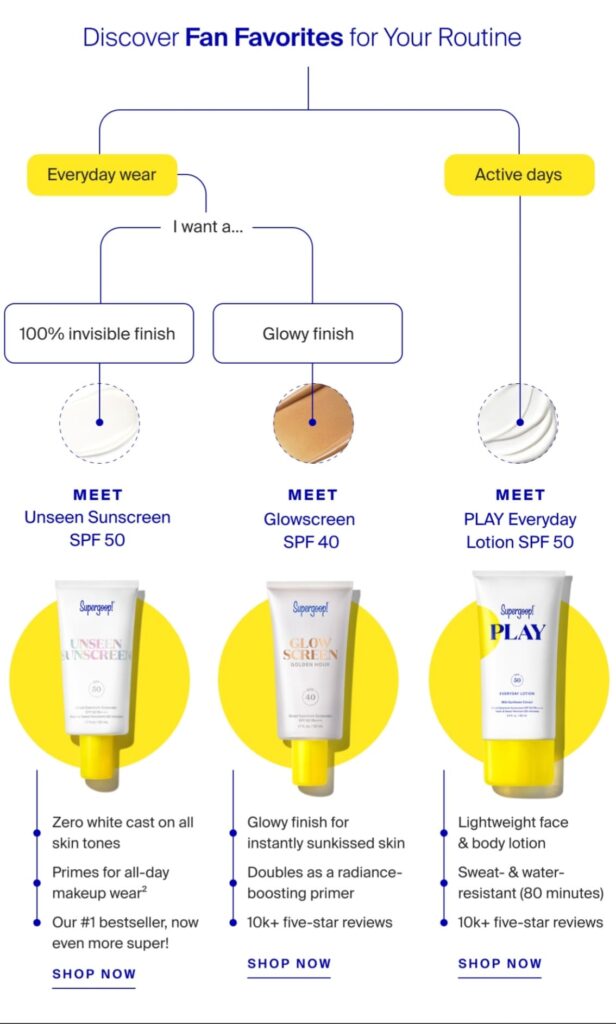
This moves the brand from seller → guide.
In skincare, reducing “wrong choice” anxiety materially increases first-purchase likelihood.
3) Proof Is Layered Early
Email 2 (“Your new fav sunscreen is inside”) leads with:
- Named testimonials
- Star ratings
- Short, scannable reviews
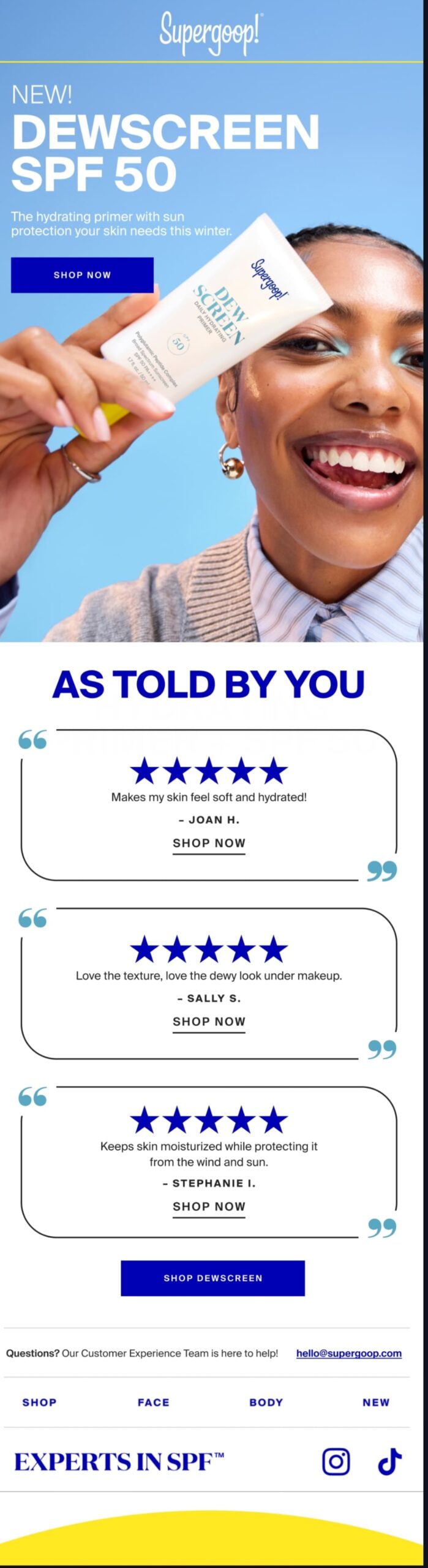
This reduces early skepticism quickly.
Email 7 reinforces with scale-based proof (“20k+ 5-star reviews”).
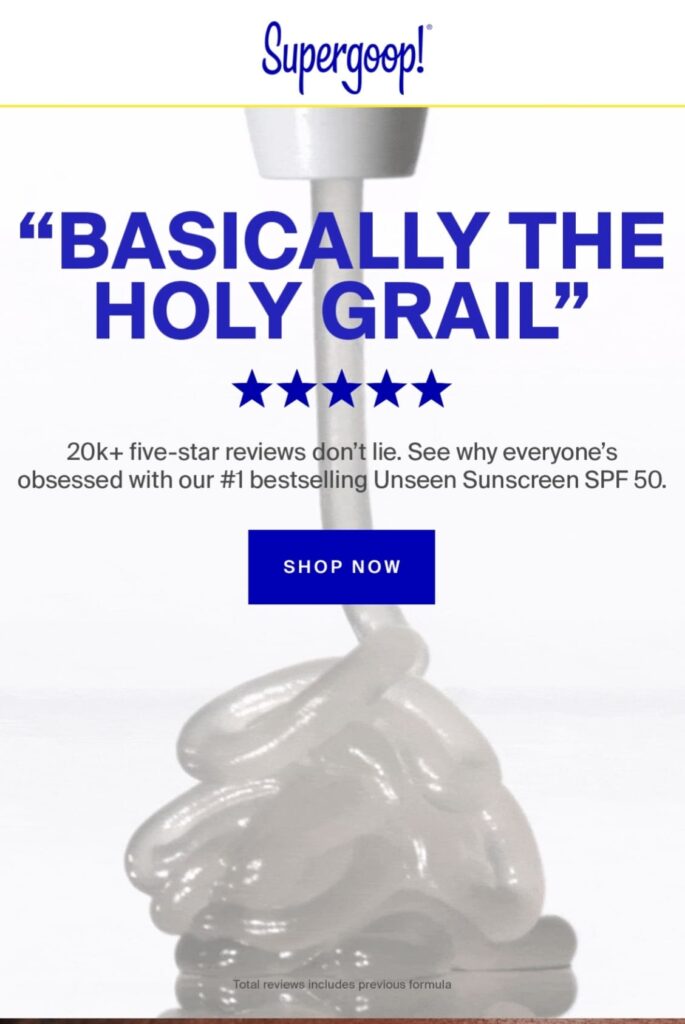
Peer validation compounds but escalation flattens later (more on that below).
4) Urgency Is Reserved for the Close
Email 8 reinforces:
- Discount expiration
- Code visibility
- Scarcity framing
The flow opens gently and closes firmly. That’s structurally sound lifecycle logic.
Where Revenue Is Likely Being Constrained
Supergoop’s welcome flow is strategically strong. However, a few structural refinements could increase first-time conversion among hesitant buyers.
1) Risk Reversal Appears After Urgency
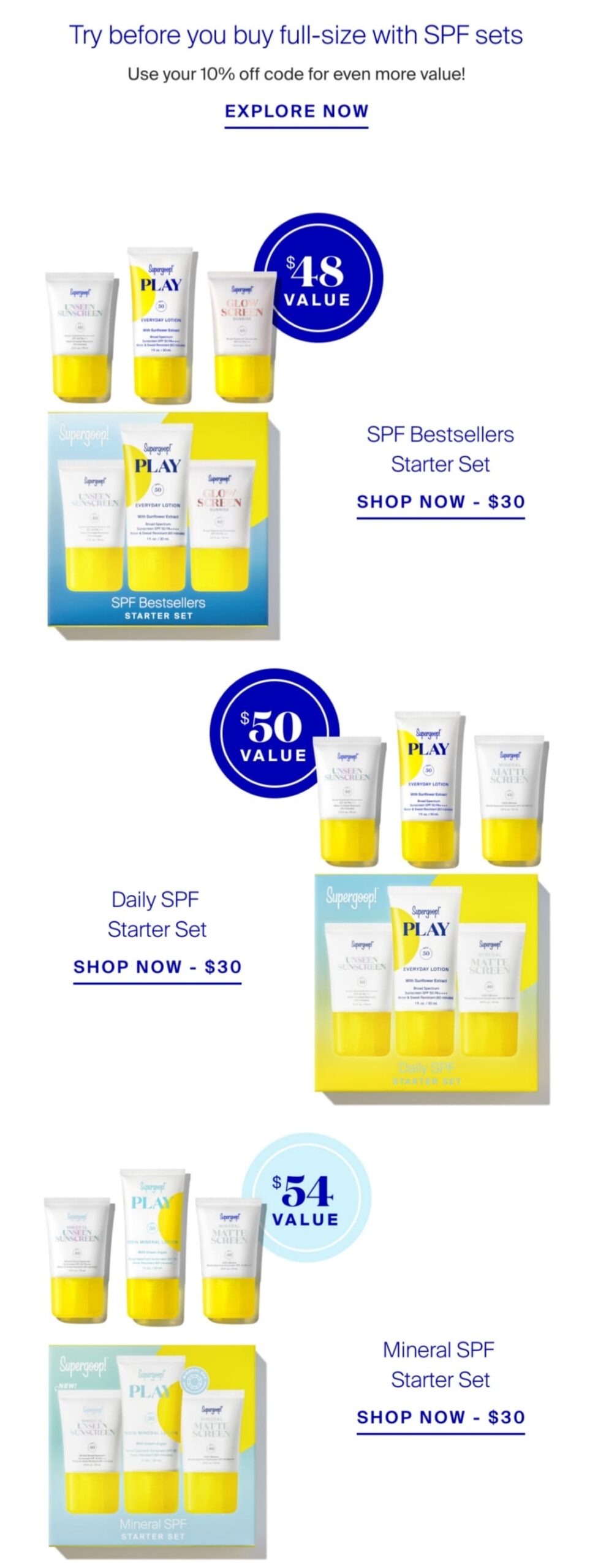
Trial sets are introduced late in the sequence (Email 8), after urgency and discount reinforcement. For high-skeptic skincare buyers, urgency amplifies uncertainty if confidence hasn’t stabilized.
When a buyer is still thinking:
- “Will this break me out?”
- “What if it feels greasy?”
- “What if I choose wrong?”
Adding expiration pressure can create hesitation rather than momentum. Risk reversal works best before scarcity.
If trial bundles were introduced before urgency, hesitation would be reduced proactively instead of being pressured under a deadline. This allows high-intent but hesitant subscribers to convert earlier, before urgency introduces resistance.
2) Safety Reassurance Exists, But Not Fully Leveraged
Supergoop does include:
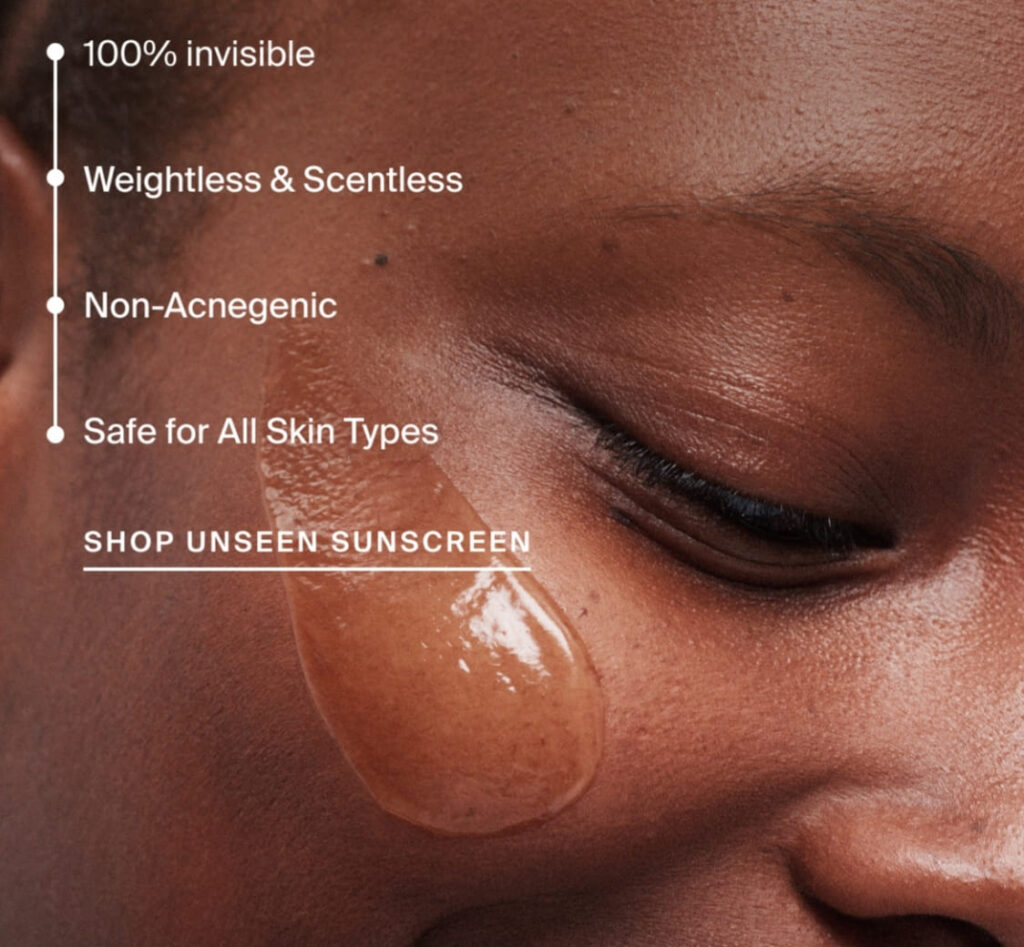
- Non-acnegenic positioning
- Suitability across skin types
- Clinical testing references
- UV absorption statistics
- “Experts in SPF” authority framing
However, these safety signals are distributed across emails rather than concentrated into a decisive conviction-building moment.
There is a psychological difference between embedding reassurance and structuring an entire message around neutralizing safety anxiety. For high-risk skincare, cautious buyers often need a clear, unmistakable reinforcement moment that says “This is safe. Here’s why. Here’s the evidence.”
Currently, safety is mentioned. But it isn’t spotlighted. That subtle distinction affects conversion among highly skeptical buyers.
3) Authority Proof Is Present But Doesn’t Escalate
Authority signals are included:
- Clinical study references
- UVB absorption data
- SPF expertise positioning
This builds baseline trust. However, the authority layer does not intensify across the sequence. It remains brand-level.
Persuasion becomes stronger when authority escalates:
Peer reviews → Clinical validation → Ingredient-level science clarity → Comparative superiority → Scarcity close
In the current structure, authority stabilizes rather than compounds. That plateau may not hurt overall performance
but can limit incremental revenue from analytical buyers who require deeper conviction before purchasing premium SPF.
What I Would Restructure
If optimizing this flow for higher first-time conversion:
1) Introduce trial bundles before urgency reinforcement. (Confidence first. Scarcity second.)
2) Insert a dedicated safety reinforcement email focused on irritation risk, long-term skin compatibility, and formulation credibility.
3) Escalate proof progression:
Peer reviews → Authority validation → Differentiation clarity → Urgency.
4) Reduce testimonial repetition to maintain persuasion velocity.
No additional discount required. Because the growth lever is sequencing, not price.
Expected Commercial Impact
With structural refinement:
- Hesitant but high-intent subscribers convert earlier
- Discount dependency decreases
- Confidence compounds faster
- Subscription uptake improves
When belief compounds before pressure, conversion increases without increasing traffic or incentives.
Final Assessment
This is a well-structured welcome flow with strong psychological foundations.
However, advancing risk reversal and deepening safety reinforcement could unlock additional revenue from skeptical first-time buyers without altering brand positioning or pricing.
Lifecycle sequencing determines revenue velocity.